Phone:
(701)814-6992
Physical address:
6296 Donnelly Plaza
Ratkeville, Bahamas.

Phone:
(701)814-6992
Physical address:
6296 Donnelly Plaza
Ratkeville, Bahamas.
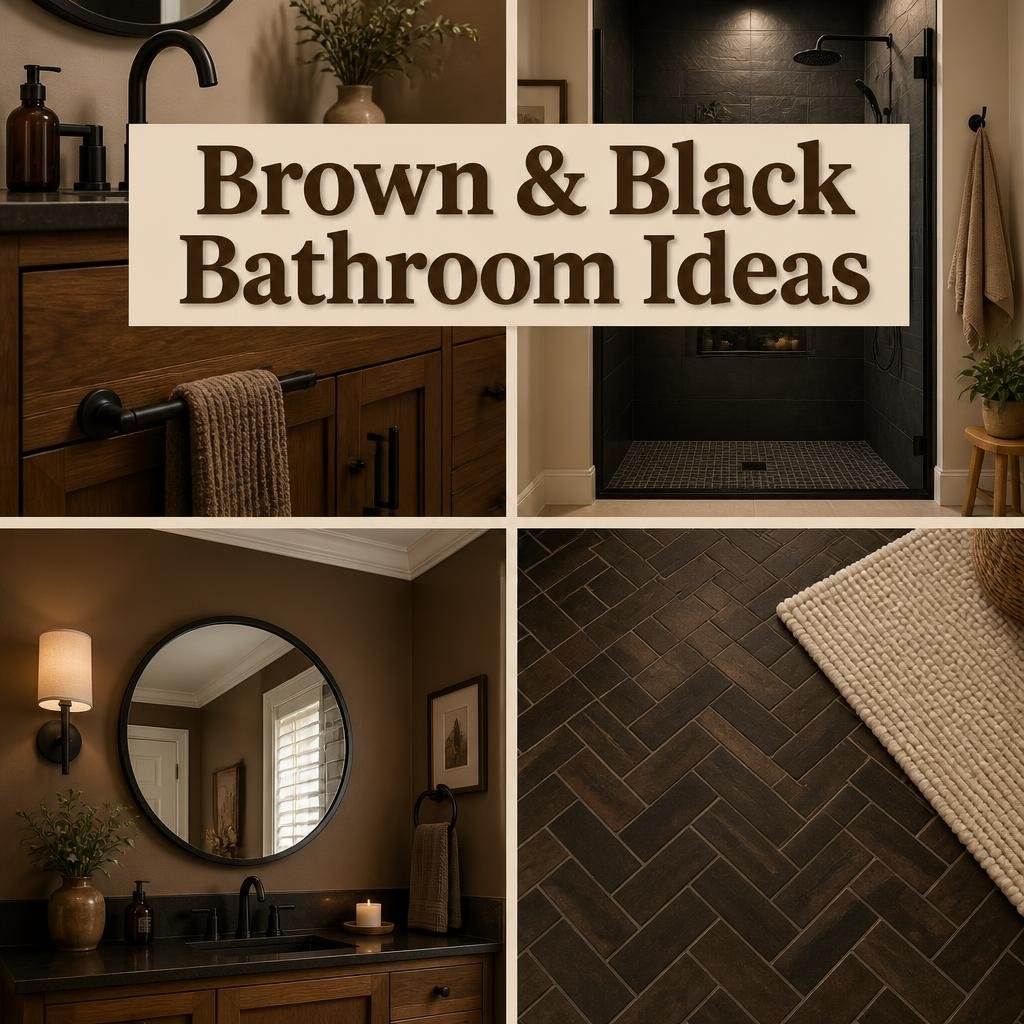
So what actually makes a brown and black bathroom look expensive? It comes down to warm wood tones paired with just enough black — on hardware, a mirror frame, or tile grout — plus layered lighting that keeps the room from feeling like a cave. Skip the cold, sterile look. Go warm instead.
Let's talk about your bathroom for a second. It's probably white, a little tired, and doesn't feel like you. You want something cozier — a bathroom with real personality — but you're not trying to blow your renovation budget doing it. Good news: brown and black is one of the cheapest color stories to pull off well, and it hides everyday wear better than white ever will. Ready to see what that actually looks like in a real space?
See also: Small Bathroom Storage Ideas That Actually Work

Nothing changes a bathroom faster than swapping out shiny chrome for matte black.
Start with the faucet, then move to the showerhead, then the towel bar — matte black hardware reads as a whole design choice, not a random upgrade. Pair it with warm brown wood cabinetry so the black doesn't feel cold or clinical. One unexpected detail: a matte black toilet paper holder mounted vertically instead of the usual horizontal bar.

A walnut vanity is the fastest way to make a small bathroom feel like a boutique hotel.
Choose a floating walnut vanity with visible wood grain, then top it with a black or dark stone countertop for contrast. Keep the wall behind it plain and light so the vanity stays the star. Add brass or black knobs — never both at once, or it starts to look busy.

Dark floors do something white floors can't — they hide everything.
An espresso-toned porcelain tile in a herringbone pattern instantly grounds the whole room. Run it wall-to-wall, then keep your walls and ceiling several shades lighter so the floor doesn't swallow the space. First, lay the tile. Then grout it in a matching dark tone so the pattern reads as one solid surface, not a grid.

Designer tip: bronze does something matte black can't — it catches light and warms up a room instead of flattening it, which matters a lot in a windowless bathroom.
Swap your black fixtures for aged bronze instead, and pair them with deep brown cabinetry for a look that feels collected over time, not bought last week. A bronze mirror frame ties the whole thing together without matching everything perfectly.

One dark wall changes everything — no full renovation required.
Paint just the vanity wall a deep chocolate brown, and leave the rest of the room a soft, warm white. This trick works in bathrooms of any size and costs almost nothing compared to retiling. Run your mirror and lighting against that dark wall so they pop instead of disappearing into white.
See also: How to Pick the Right Paint Sheen for a Bathroom

A black slate shower wall turns an ordinary stall into a spa.
Tile the shower in textured black slate, then keep the rest of the bathroom light so the shower reads as a deliberate feature, not an overwhelming one. Common mistake to avoid: tiling the entire bathroom — floor, walls, shower — in the same dark slate. It kills the light and makes even a large room feel tiny. Save the dark tile for one zone.

Look up. That's the trick nobody talks about.
A caramel-stained wood ceiling — even just tongue-and-groove planks — adds warmth from an angle most people ignore. Keep the walls simple and white so the ceiling gets all the attention. It's a small move. It changes everything.

An onyx or dark quartz countertop is the one splurge worth making in this whole list.
Pair a rich, near-black countertop with a warm wood vanity base, and let the veining do the talking. Backlit onyx is beautiful but pricey — a dark honed quartz gets you 90% of the look for a fraction of the cost. First the base, then the top, then the faucet — build outward from there.

A small cognac leather stool tucked by the tub does more work than you'd expect.
It softens all that hard tile and stone, and gives the room a lived-in, collected feel instead of a showroom one. Furniture in a bathroom? Yes. It's a small detail. It's worth it.

Designer tip: charcoal grout instead of black tile gives you almost the same moody effect for a fraction of the cost, since you're only changing the lines, not every single tile.
Use it on a warm cream or beige subway tile, and the contrast reads as intentional rather than accidental. It's one of the cheapest upgrades on this entire list. Ask your tiler for it by name.

Skip white cabinets entirely and go coffee-brown instead.
A deep coffee stain on shaker-style cabinet doors hides fingerprints and water spots far better than white ever will — genuinely a practical win, not just a style one. Add black cup pulls, and you've got a vanity that looks custom-built.

This one's the cheapest fix on the whole list, and maybe the most effective.
Swap your builder-grade mirror for one with a thin black metal frame — round, arched, or rectangular all work. It instantly reads as an upgrade against warm brown walls or wood cabinetry. Nothing else needs to change for this one to work.
See also: Budget Bathroom Upgrades Under $200

Terracotta tile brings an earthy, sun-warmed brown into a room that usually skips color entirely.
Use it on the floor or as a half-wall tile treatment, and pair it with black grout for definition. It's a look that feels imported, even when the tile itself is affordable. Warm. Textured. Different from every other bathroom on your street.

One floating ebony shelf above the toilet solves your storage problem and adds style at the same time.
Stain a simple pine board in a deep ebony tone, mount it on hidden brackets, and style it with two or three items — never more. Overloading it defeats the clean look you're going for.

If you only do one thing from this whole list, repaint your walls a warm mocha brown.
It's the lowest-cost, highest-impact change here, full stop. Choose a matte or eggshell finish, keep your trim white for contrast, and watch the whole room feel instantly warmer and more expensive than it did in plain white.
Pro tip across all looks: keep your dark tones on hardware, accents, or one wall — not everywhere at once — balance every brown or black with a warm light source, and pick one splurge item, like a countertop or a tile, instead of trying to upgrade five things at once. Do that, and you genuinely cannot get this look wrong.